
China Monochrome LCD Display Manufacturer, Supplier, Factory
How to Source Custom Monochrome LCD Displays for Your Specific Application?
Standard displays rarely fit perfectly into a new mechanical design. Sourcing the right Monochrome LCD Display requires balancing readability, power constraints, and extreme environmental durability. Jingda Display provides end-to-end customization, from glass tooling to interface configuration, ensuring seamless integration into your terminal device.


Key Customization Options for OEM Monochrome LCD Modules
To guarantee optimal visibility under various lighting conditions, our full range of LCD display solutions allows you to specify the exact parameters required for your project.
Display Mode & Polarizer
Choose from TN, HTN, STN, FSTN, FFSTN, and VA modes. Select positive or negative display, and specify your preferred polarizer type for transmissive, reflective, or transflective viewing.
LED Backlight Colors
Enhance dark-environment visibility with customizable LED backlights. Available in white, blue, yellow-green, red, and RGB configurations to perfectly match your product's aesthetic and power budget.
FPC Pitch & Interface
We tailor the Flexible Printed Cable (FPC) length, pitch, and pin-out to align perfectly with your PCB layout. Interfaces such as SPI, I2C, and parallel options are fully supported based on your driving IC selection.
Monochrome LCD Display FAQ for Procurement Teams
Q: What are the common applications for Monochrome LCD Displays?
A: Because of their ultra-low power consumption, high contrast, and ability to operate in extreme temperatures, monochrome LCDs are heavily used in smart utility meters (electricity, water, gas), solar and PV inverters, UPS systems, industrial control panels, medical diagnostic equipment, and household appliances.
Q: Can Jingda Display provide custom tooling and samples before mass production?
A: Yes. With over a decade of LCD manufacturing experience, we handle in-house tooling for custom segment layouts and specific dimensions. We provide rapid prototyping and sample runs so you can evaluate the display's performance, viewing angle, and backlight in your actual enclosure before committing to volume production.
Q: What is the typical lead time for bulk orders?
A: Lead time depends on the level of customization and order quantity. For standard modules, samples can be dispatched quickly, and bulk orders typically take 3-4 weeks. For fully customized LCD displays requiring new glass tooling, the lead time generally ranges from 4 to 6 weeks, ensuring strict quality control at every step.

- View as
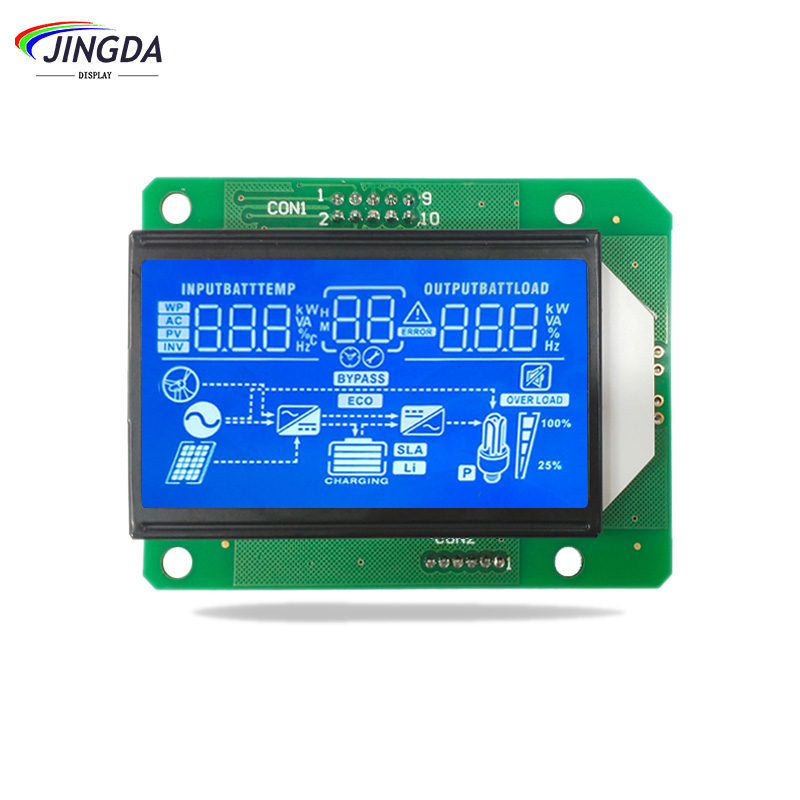
Segment LCD Display HTN Blue Module LCM Display
This factory-wholesale Segment LCD Display HTN Blue Module LCM Display is a complete drop-in assembly with COB technology for robust performance.
Module No: JDA0801-16037C1
Technology: COB technology
Operating Temp: -10 to 60℃
View Angle: Wide viewing angle
Drive IC: HT1621
Perfect for UPS devices and solar inverters. Contact us for custom glass tooling and a 24-hour quote.
Read MoreSend InquiryModule No: JDA0801-16037C1
Technology: COB technology
Operating Temp: -10 to 60℃
View Angle: Wide viewing angle
Drive IC: HT1621
Perfect for UPS devices and solar inverters. Contact us for custom glass tooling and a 24-hour quote.
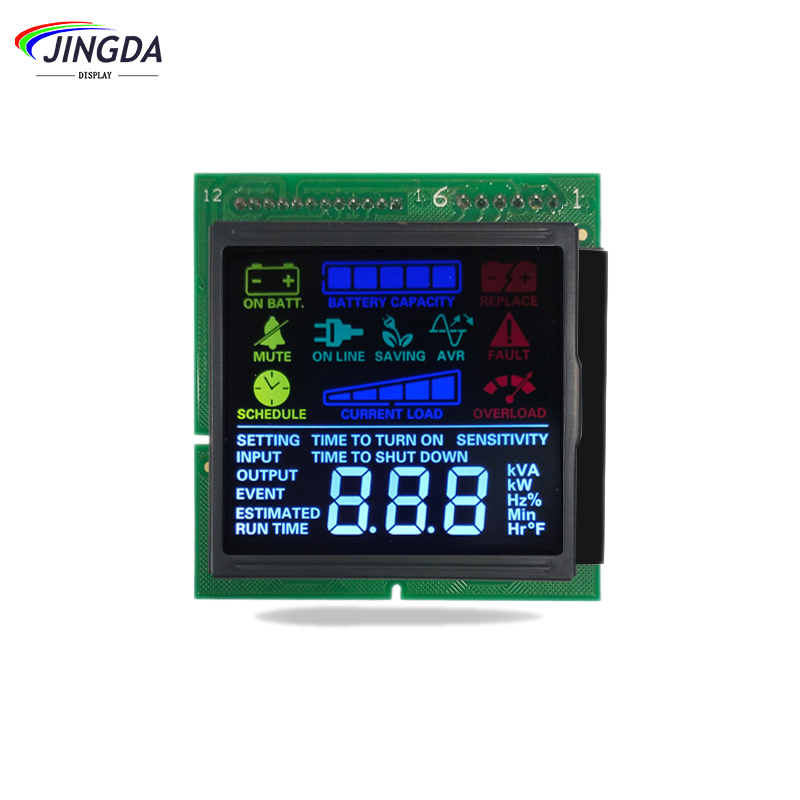
Segment LCD Display VA Negative LCD Mode
JDA company is a professional segment LCD display manufacturer and supplier in Shenzhen, China. The segment LCD display VA negative LCD mode is a display solution commonly used in Home Appliances, Medical Equipment, Instrumentation and Industrial Control Devices, known for its high efficiency, low energy consumption and clear visual presentation. Our LCD products have the advantage of high cost-effectiveness and can provide a good LCD solution for clients.
Module No: JDA0301-19101A1
Technology: COB technology
Operating Temp.: -20 to 70℃
Drive IC: TCP802-01
View Angle: Wide viewing angle
Read MoreSend InquiryModule No: JDA0301-19101A1
Technology: COB technology
Operating Temp.: -20 to 70℃
Drive IC: TCP802-01
View Angle: Wide viewing angle
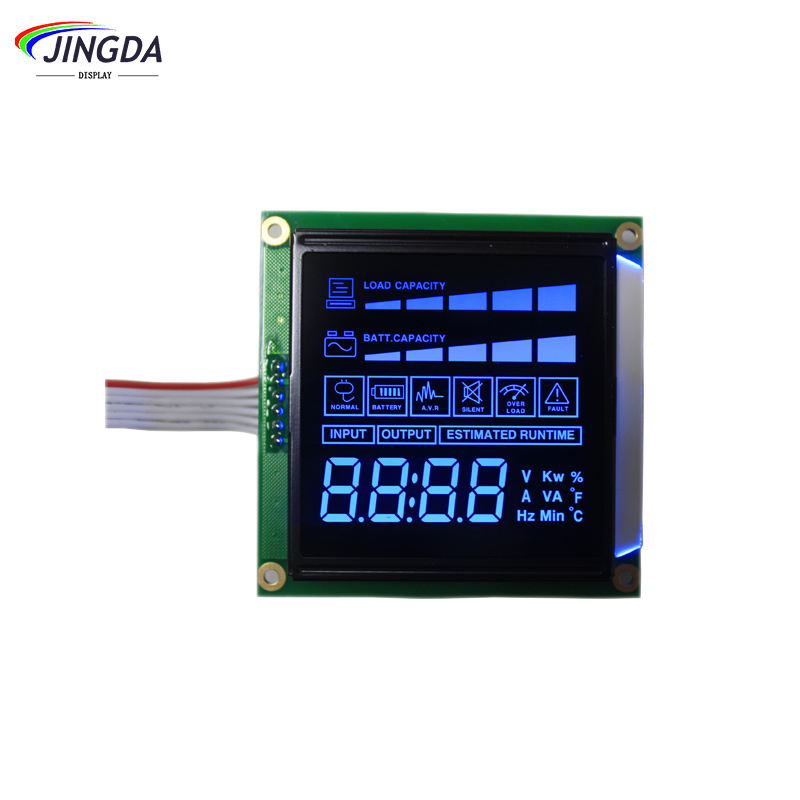
7 Segment LCD Display VA HTN Negative LCD Display
This wide-temperature 7 Segment LCD Display VA HTN Negative LCD Display offers high cost-effectiveness and ultra-low power consumption.
Module No: JDA0401-12007F3
Technology: COB technology
Operating Temp: -20 to 70℃
View Angle: Wide viewing angle
Drive IC: TCP802-01
Ideal for industrial instruments and medical devices. Contact us for custom tooling and a 24-hour quote.
Read MoreSend InquiryModule No: JDA0401-12007F3
Technology: COB technology
Operating Temp: -20 to 70℃
View Angle: Wide viewing angle
Drive IC: TCP802-01
Ideal for industrial instruments and medical devices. Contact us for custom tooling and a 24-hour quote.
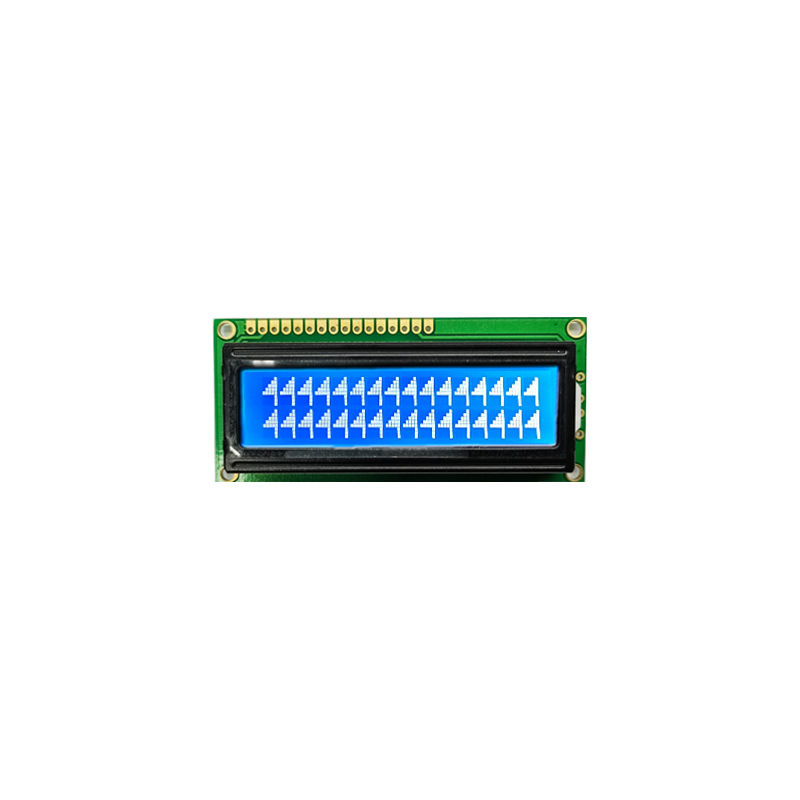
16x2 Character LCD Display STN Blue Display
Jingda Display supplies this low power consumption 16x2 Character LCD Display STN Blue Display transmissive module. As a reliable STN blue LCD module, it features aCOB LCD display structure and AIP31066L LCD driver. We support any custom character LCD requirements for your projects.
Product Model: JDA1602-10
Technology: COB technology
View Angle: Wide viewing angle
Drive IC: AIP31066L/AIP3165LC
Read MoreSend InquiryProduct Model: JDA1602-10
Technology: COB technology
View Angle: Wide viewing angle
Drive IC: AIP31066L/AIP3165LC
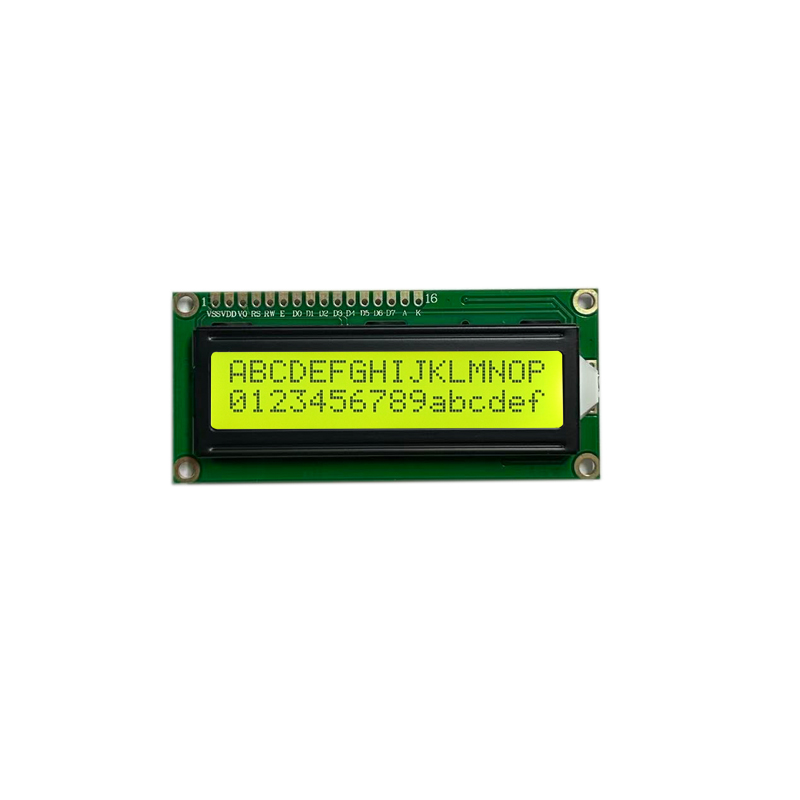
1602 Character LCD Display FSTN Display Yellow Green LCD Mode
Jingda Display supplies high-performance industrial displays. This 1602 Character LCD Display FSTN Display Yellow Green LCD Mode features a negative transmissive screen and white backlight. Ideal for meters.
Module No: JDA1602/yellow green
Technology: COB technology
Operating Temp: 0 to 50℃
View Angle: Wide viewing angle
Drive IC: AIP31066L/AIP3165LC or Compatible
Read MoreSend InquiryModule No: JDA1602/yellow green
Technology: COB technology
Operating Temp: 0 to 50℃
View Angle: Wide viewing angle
Drive IC: AIP31066L/AIP3165LC or Compatible
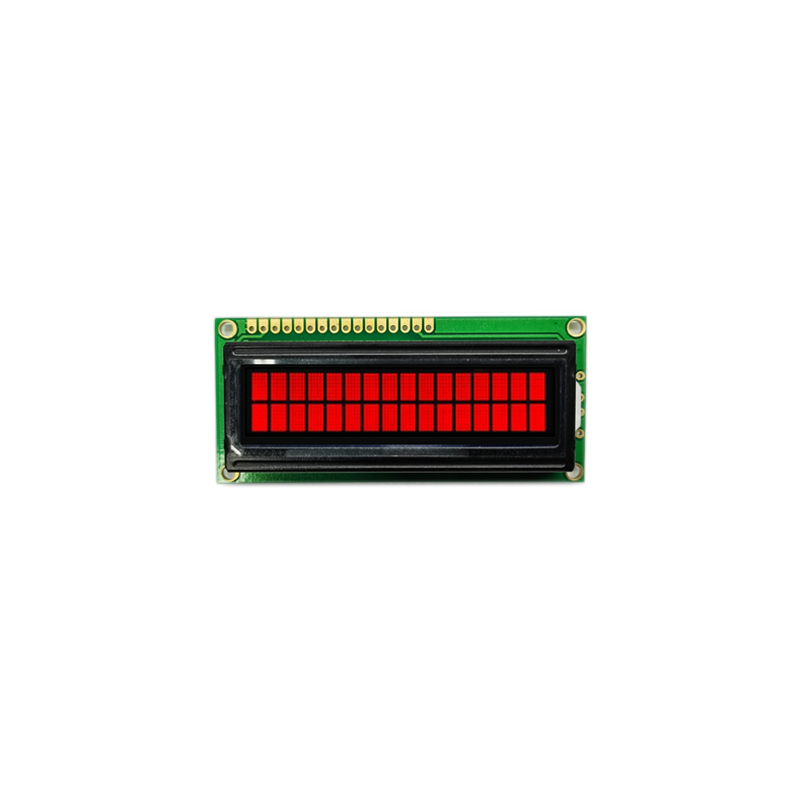
1602 LCD Display Character Display TN STN Red LCD Display
Jingda display’s 16x2 character LCD display Green Module, a practical and high-performance segment LCD display featured with eye-catching green backlight for outstanding readability in diverse lighting environments. Boasting stable performance, low power consumption and durable structure, this standard 16x2 LCD module supports easy wiring and wide compatibility with mainstream controllers.
Module No: JDA1602-10
Technology: COB technology
Working Environment: Wide temperature operation
View Angle: Wide viewing angle
Read MoreSend InquiryModule No: JDA1602-10
Technology: COB technology
Working Environment: Wide temperature operation
View Angle: Wide viewing angle
Proven Monochrome LCD Applications
The robust nature of our Monochrome LCD Display modules makes them the preferred choice for mission-critical environments. Our displays are extensively deployed in solar inverters, PV inverters, and UPS devices to ensure accurate real-time status reporting. Furthermore, our high-contrast LCDs are widely utilized in smart electrical meters, water meters, and gas meters across global utility infrastructure. For applications requiring richer graphics or color, you can explore our TFT Display category or review our OLED Display category for next-generation display technologies.
Manufacturing Strength and Quality Assurance
- 10+ Years of Proven Expertise: Shenzhen Jingda Display Technology Co., Ltd. has a strong market position in the design and manufacture of monochrome LCD displays, backed by a dedicated R&D team and in-house tooling capabilities.
- End-to-End Cost Efficiency: By managing the entire production process—from glass cutting and IC bonding to FPC assembly and backlight integration—we provide highly cost-effective electronic parts without compromising on reliability.
- Rigorous Quality Control: Our factory adheres to strict quality management systems. Every batch undergoes comprehensive electrical and environmental testing to ensure stable, reliable performance in high-humidity, high-vibration, and wide-temperature conditions.