
China OLED Display Manufacturer, Supplier, Factory
Which OLED Display configuration fits your program?
When sourcing for OEM projects, selecting the right OLED Display requires matching the interface content, resolution, and size to the driving matrix. Jingda Display supplies both passive-matrix and active-matrix options, allowing design teams to compare module specifications directly.


Sourcing Checklist for OEM OLED Display Integration
Beyond diagonal size, a successful procurement process evaluates the module against real-world usage. Jingda Display supports engineering teams through the following checkpoints:
- Pin Budget & Protocols: Verify host system compatibility. Our PMOLED Display modules typically utilize SPI or I2C, while more complex interfaces may require MIPI.
- Active Area vs. Outline: Check the FPC exit direction and connector height. Mechanical constraints often dictate the final fit more than the glass dimensions.
- Content-Dependent Power: Because black pixels are off, dark-mode interfaces consume less power. Calculate your battery life based on actual UI patterns rather than maximum brightness.
- Lifetime Management: OLED luminance naturally declines. Mitigate static high-brightness elements through UI design or pixel-shifting to prevent differential aging.
OLED Display FAQ for Design and Procurement Teams
Q: What is the minimum order quantity for a custom OLED Display module?
A: MOQ depends on whether the program uses a standard module or a custom configuration. Standard PMOLED modules in sizes such as 0.96-inch and 2.8-inch typically support lower entry quantities, while a fully custom OLED Display with modified active area, FPC, interface or cover glass generally requires a higher tooling-related MOQ. Jingda Display reviews MOQ alongside the electrical and mechanical specification so the sourcing plan matches both prototype and volume production stages.
Q: How do I choose between PMOLED and AMOLED for an industrial or medical OLED Display?
A: PMOLED is generally suited to small displays with simpler graphics, character data and icon-based interfaces, where a straightforward driving scheme and lower cost are priorities. AMOLED uses a TFT backplane with a storage capacitor per pixel, enabling higher resolution, faster refresh and lower power consumption for complex or dynamic content. Selection should match the interface content, resolution requirement, size and expected service life rather than choosing a technology by name alone.

- View as

2.8 inch OLED Display Module Monochrome LCD Display
Customized Standard 2.8 inch OLED display module monochrome lcd display white backlight.
Module No: JDA-2.8-25664UCB2
Drive IC: SSD1322
Resolution: 256*64 Pixel
Working Environment: Wide temperature operation
View Angle: Wide viewing angle
Read MoreSend InquiryModule No: JDA-2.8-25664UCB2
Drive IC: SSD1322
Resolution: 256*64 Pixel
Working Environment: Wide temperature operation
View Angle: Wide viewing angle
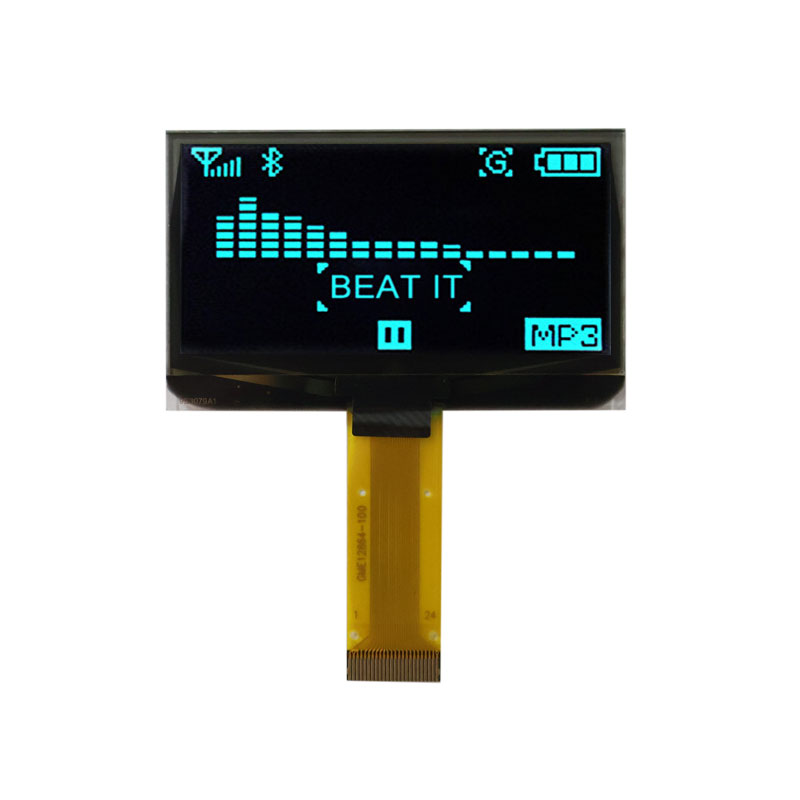
2.42 inch OLED Display 12864 SPI OLED Display Module
Higher contrast 2.42 inch OLED display 12864 SPI OLED display module SSD1309 screen.
Module No: JDA12864-100
Display Color: Monochrome White
Drive IC: SSD1309
FPC Number: UT-0205-P05
Active Area: 55.01*27.49mm
Read MoreSend InquiryModule No: JDA12864-100
Display Color: Monochrome White
Drive IC: SSD1309
FPC Number: UT-0205-P05
Active Area: 55.01*27.49mm

PM OLED 2.8 inch OLED Module
This high-contrast PM OLED 2.8 inch OLED Module offers fast response, wide viewing angles, and a slim form factor without needing a backlight..
Module No: JDA2.8-25664UCB2
Working Environment: Wide temperature operation
View Angle: Wide viewing angle
Perfect for smart door locks and wearable devices. Contact us for custom solutions and a 24-hour quote.
Read MoreSend InquiryModule No: JDA2.8-25664UCB2
Working Environment: Wide temperature operation
View Angle: Wide viewing angle
Perfect for smart door locks and wearable devices. Contact us for custom solutions and a 24-hour quote.

0.96 inch OLED 128x64 Monochrome LCD Module
Jingda display is a professional supplier of LCD display screen, which is mainly supplies monochrome LCD displays, TFT display, OLED display module and HMI solution. For the PM OLED, there are many types for your options. JDA’s 0.96 inch OLED 128x64 monochrome LCD module is a compact and high-performance display solution featuring sharp resolution and excellent contrast. With its self-emissive OLED technology, it delivers clear visuals without the need for a backlight, ensuring low power consumption and wide viewing angles.
Product No.: JDA096S0700WG11
Resolution: 128x64
Drive IC: SSD1315
Interface: SPI/IIC
Operating Temp.: -40 to 70℃
Read MoreSend InquiryProduct No.: JDA096S0700WG11
Resolution: 128x64
Drive IC: SSD1315
Interface: SPI/IIC
Operating Temp.: -40 to 70℃
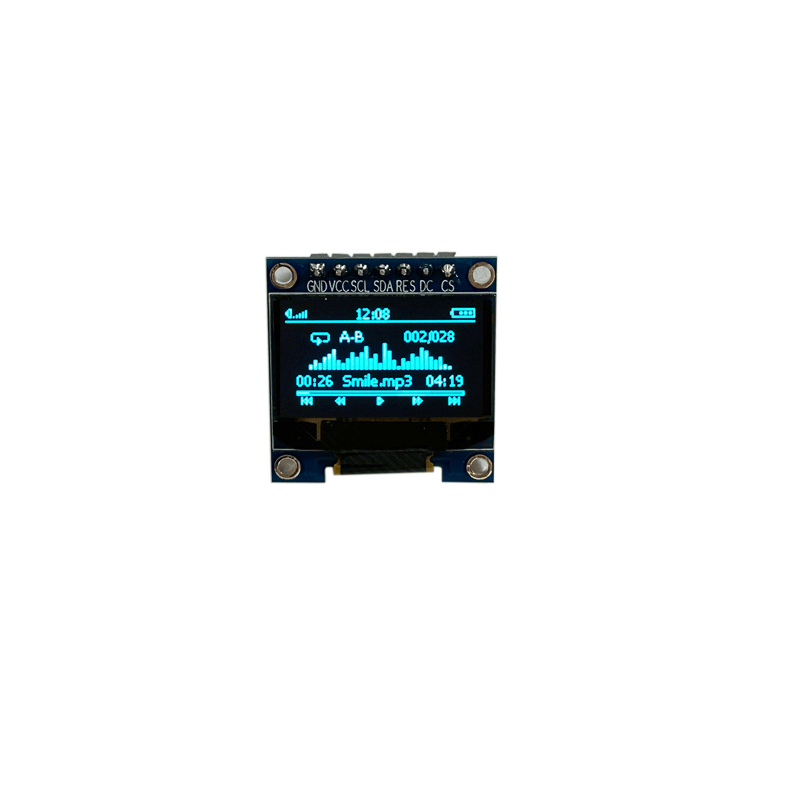
0.96 inch PM OLED Display Module SSD1306
Jingda display manufacture small-mid size display modules, including monochrome LCD and LCM, 0.96-25 inch TFT & OLED LCM,
HMI solutions, and JDA has over ten years of experience in display module field. For the OLED display, there are many types for your options. Jingda display’s 0.96 inch PM OLED display module SSD1306 is a high-performance small-size display module integrated with the industry-proven SSD1306 driver IC, designed to meet the diverse needs of embedded systems, wearable devices, industrial control, and consumer electronics.
Product No: JDA096S0700WG01
Drive IC: SSD1306
Display Mode: Passive Matrix
Viewing Direction: All
Read MoreSend InquiryProduct No: JDA096S0700WG01
Drive IC: SSD1306
Display Mode: Passive Matrix
Viewing Direction: All

2.08 inch PM OLED With High Contrast and Low Power Screen
JDA’s 2.08 inch PM OLED with high contrast and low power screen for durability and efficiency, this display delivers crisp visuals, ultra-low power consumption and certain voltage.
Module No: JDAP020801N
Active Area: 51.18*12.78mm
Resolution:256*64
Drive IC: SH1122G
Interface: SPI
Brightness: 180cd/㎡
Read MoreSend InquiryModule No: JDAP020801N
Active Area: 51.18*12.78mm
Resolution:256*64
Drive IC: SH1122G
Interface: SPI
Brightness: 180cd/㎡
Proven OLED Display Applications
The self-emissive nature of our modules makes them a strong fit for demanding environments. Jingda display has successfully supplied a 0.96-inch OLED Display module (128×64, SSD1306) for a wearable pulse oximeter application, where true-black contrast was critical for SpO2 waveform rendering. Our modules are also widely deployed in industrial HMI terminals, smart locks, and portable IoT instrumentation. If you require color complexity or larger sizes beyond OLED's typical band, you can review our TFT display category or explore the Monochrome LCD and OLED Display category.
Supplier Qualification and Quality Assurance
- Certified Manufacturing: Facilities hold ISO 9001, ISO 14001, IATF16949, and GJB9001C certifications, meeting strict industrial and automotive standards.
- Rigorous Testing: Products undergo extended stress testing, including 10,000-hour reliability evaluation, ensuring stable performance in high-humidity or high-vibration conditions.
- In-House Capabilities: Our 10,000-square-meter factory includes dust-free workshops, automated lines, and dedicated R&D teams to support your integration.