

What is the Application Advantages of MIPI Interface Displays?
In the modern display industry, the selection of display interfaces directly determines the performance, power efficiency, integration level, and application scope of display devices. Among countless display solutions, MIPI display, LCD Display, and TFT display stand as the three most mainstream technical options widely adopted in consumer electronics, industrial equipment, wearable devices, and automotive systems. Unlike the parallel interfaces used in traditional TFT displays and LCD display panels, MIPI displays adopt a high-speed differential serial transmission architecture, which brings revolutionary upgrades in terms of power consumption, signal stability, structural integration and resolution support.
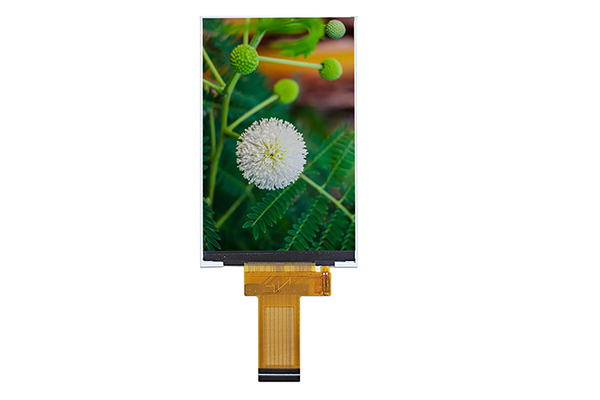
What is MIPI display?
MIPI DSI is a high-speed serial interface standard specifically designed for connecting processors to display modules. Unlike traditional parallel interfaces that transmit data across multiple lines simultaneously, MIPI DSI uses differential serial lanes to transmit pixel data and control commands. In short, TFT display is the driving core, LCD Display is the imaging carrier, and MIPI display is the advanced transmission interface that empowers the two traditional technologies, which is the core reason why MIPI interface displays have rapidly replaced traditional interface solutions in high-end display markets in recent years.
Core Application Advantages of MIPI Interface Displays
Compared with TFT display and LCD Display panels equipped with traditional interfaces, MIPI interface displays have comprehensive advantages in power consumption control, transmission performance, structural integration, anti-interference ability and scenario adaptability, which fully meet the stringent design requirements of modern miniaturized, portable and high-definition intelligent devices. The detailed advantages are analyzed as follows.
1. Ultra-Low Power Consumption, Extending Device Battery Life
Traditional TFT display and LCD Display using RGB or parallel interfaces require continuous full-power signal transmission and screen refresh, even when displaying static images, resulting in invalid power consumption waste. MIPI display supports intelligent rate adjustment and screen refresh optimization. This advantage is crucial for battery-powered devices such as smart watches, Bluetooth headsets, handheld industrial instruments and mobile medical equipment, effectively extending the standby and working time of terminal devices.
2. High-Bandwidth Transmission, Supporting High-Resolution and High-Frame-Rate Display
With the popularization of high-definition display requirements, traditional interfaces of TFT display and LCD Display have exposed obvious bandwidth bottlenecks. The parallel RGB interface has limited single-channel transmission rate, and it is difficult to support resolutions above 2K and frame rates above 60fps; although LVDS interface has improved bandwidth, its expansion flexibility is poor, and it cannot adapt to the rapid iteration of high-definition display technology.
MIPI display interface has excellent high-bandwidth transmission capability. For high-end TFT display panels and high-definition LCD Display modules, MIPI interface can perfectly present delicate picture details, smooth dynamic video effects and high-color-gamut color performance.
3. Ultra-High Integration, Optimizing Product Structural Design
In the design of modern intelligent hardware, miniaturization, thinning and lightweight have become important product competitiveness, and MIPI display interface provides strong support for structural optimization.
The MIPI interface adopts serial differential transmission design, which greatly reduces the number of pins. At the same time, simplified wiring also reduces the difficulty of hardware development and production processing, effectively lowering the product defective rate and manufacturing cost.
4. Strong Anti-Interference and Low EMI, Improving Operation Stability
Electronic interference and signal crosstalk are common problems faced by traditional TFT display and LCD Display modules in industrial, vehicle-mounted and high-precision electronic scenarios. Parallel interface signal transmission is easy to generate electromagnetic interference (EMI), and the signal is susceptible to external environmental interference, resulting in screen flicker, color cast, screen tearing and other abnormal phenomena, seriously affecting display stability.
MIPI interface displays offer a compelling combination of advantages that make them the preferred choice for modern display applications. From the exceptional power efficiency that extends battery life in mobile devices to the high bandwidth that enables 4K and beyond resolutions in premium displays, MIPI DSI delivers performance that meets the most demanding requirements.
As display resolutions continue to increase and user expectations for visual quality continue to rise, the advantages of MIPI interface displays become even more pronounced. Whether the application is a flagship smartphone, an automotive infotainment system, an industrial HMI terminal, or a portable medical device, MIPI DSI provides the foundation for exceptional visual experiences.
About Jingda Display
Shenzhen Jingda Display Technology Co., Ltd is a professional manufacturer specializing in the research, development, and production of LCD displays, TFT screens and OLED&HMI solutions. With over 10+ years of industry experience, JDA has established ourselves as a trusted partner for OEM and ODM display projects worldwide.