

What makes the 0.96 inch PM OLED Display Module SSD1306 so reliable for embedded projects?
The 0.96 inch PM OLED Display Module SSD1306 has become one of the most widely used miniature display solutions in embedded electronics, IoT devices, wearable systems, and DIY engineering projects. This article explores its architecture, performance advantages, integration methods, and real-world applications in detail. It is designed to help engineers, product designers, and hobbyists understand why this compact OLED module is trusted for high-clarity output, low power consumption, and long-term stability in demanding environments.
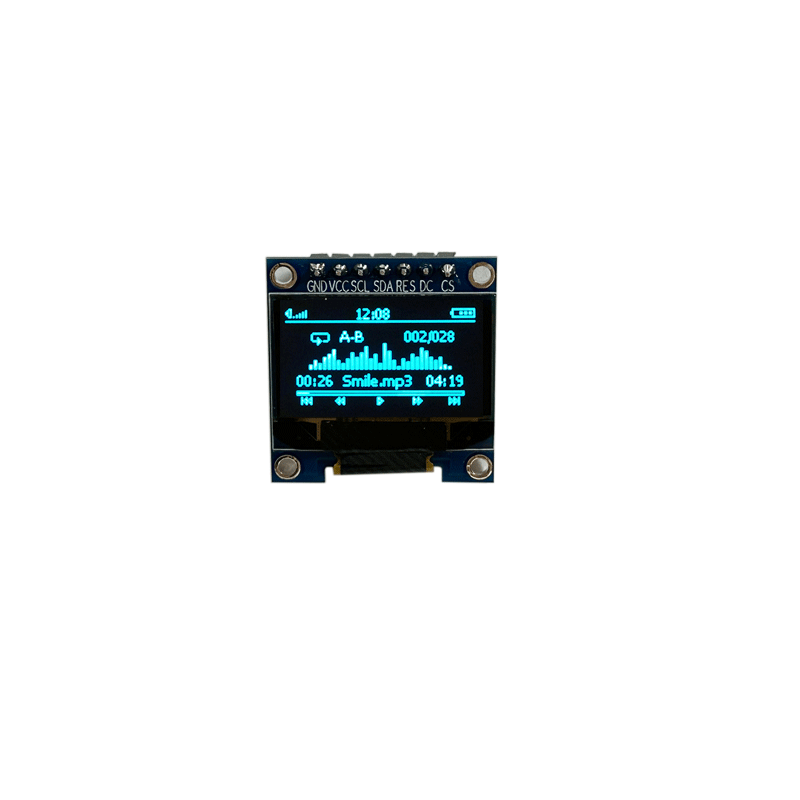
Table of Contents
- 1. Overview of the 0.96 inch PM OLED Display Module SSD1306
- 2. Internal Architecture and Working Principle
- 3. Key Features and Advantages
- 4. Technical Specifications Explained
- 5. How to Integrate the SSD1306 OLED Module
- 6. Communication Interfaces (I2C vs SPI)
- 7. Power Consumption and Efficiency
- 8. Common Problems and Troubleshooting
- 9. OLED vs LCD Comparison
- 10. Real-World Application Scenarios
- 11. Design Considerations for Engineers
- 12. Frequently Asked Questions
- Conclusion
1. Overview of the 0.96 inch PM OLED Display Module SSD1306
The 0.96 inch PM OLED Display Module SSD1306 is a compact organic light-emitting diode display commonly used in microcontroller-based systems. Unlike traditional LCDs, OLED technology emits light directly from each pixel, eliminating the need for backlighting. This results in deeper contrast, thinner structure, and superior viewing angles.
The SSD1306 driver IC controls pixel-level operations and manages communication between the microcontroller and display matrix. Because of its simplicity and efficiency, it has become a standard choice in Arduino, ESP32, Raspberry Pi, and other embedded platforms.
2. Internal Architecture and Working Principle
At the core of the module is the SSD1306 controller, which handles memory mapping, display refresh cycles, and command interpretation. The display consists of a 128x64 pixel matrix (commonly), where each pixel is independently controlled.
Unlike LCDs, OLED panels do not require a backlight. Each pixel emits its own light when voltage is applied. This self-emissive property allows extremely high contrast ratios and near-perfect black levels.
- Pixel-driven emission system
- Integrated display RAM (GDDRAM)
- Internal oscillator for timing control
- Built-in voltage booster circuit
3. Key Features and Advantages
The popularity of the 0.96 inch PM OLED Display Module SSD1306 comes from its combination of performance and simplicity. Below are its major advantages:
- Ultra-high contrast ratio (typically 2000:1 or higher)
- Wide viewing angle up to 160°
- Very low power consumption in static display mode
- No need for backlight system
- Fast response time suitable for animations
- Compact PCB footprint for space-constrained devices
These features make it especially suitable for battery-powered systems and portable electronics where energy efficiency is critical.
4. Technical Specifications Explained
Understanding the technical specifications helps engineers choose the right display configuration for their project requirements.
| Parameter | Specification |
|---|---|
| Display Size | 0.96 inch |
| Resolution | 128 × 64 pixels |
| Driver IC | SSD1306 |
| Interface | I2C / SPI |
| Operating Voltage | 3.3V – 5V (module dependent) |
| Power Consumption | Very low (depending on brightness and usage) |
These specifications highlight its compatibility with most microcontroller ecosystems without requiring additional power regulation complexity.
5. How to Integrate the SSD1306 OLED Module
Integration is one of the strongest advantages of this module. Even beginners can implement it in simple steps.
- Step 1: Connect VCC and GND pins properly
- Step 2: Choose communication protocol (I2C is most common)
- Step 3: Install SSD1306 library on microcontroller platform
- Step 4: Initialize display in firmware
- Step 5: Send graphical or text data to screen buffer
Because the module already includes most required components, no external driver circuits are needed.
6. Communication Interfaces (I2C vs SPI)
The SSD1306 supports both I2C and SPI communication, each with unique advantages.
I2C is widely used due to its simplicity, requiring only two data lines (SDA and SCL). This reduces wiring complexity, making it ideal for compact embedded systems.
SPI, on the other hand, offers faster data transfer rates and is preferred in applications involving animations or frequent screen updates.
- I2C: Minimal wiring, lower speed, ideal for sensors and simple displays
- SPI: Faster refresh, more pins required, better for graphics-heavy systems
7. Power Consumption and Efficiency
One of the most important advantages of OLED technology is its energy efficiency. The 0.96 inch PM OLED Display Module SSD1306 consumes power only when pixels are lit. Black pixels require virtually no energy.
This makes it particularly useful in:
- Battery-powered IoT devices
- Wearable electronics
- Portable measurement tools
However, displaying full-white screens continuously will increase power usage significantly, so optimized UI design is essential.
8. Common Problems and Troubleshooting
Even though the module is reliable, users may encounter integration issues. Below are common problems and solutions:
- Blank screen: Check I2C address and wiring connections
- Flickering display: Ensure stable power supply
- Incorrect output: Verify library configuration and resolution settings
- Low brightness: Adjust software contrast settings
Most issues are software-related rather than hardware defects.
9. OLED vs LCD Comparison
| Feature | OLED (SSD1306) | LCD |
|---|---|---|
| Backlight | Not required | Required |
| Contrast | Very high | Moderate |
| Power Usage | Lower (dark mode efficient) | Constant backlight consumption |
| Thickness | Ultra-thin | Thicker |
| Viewing Angle | Wide | Limited |
10. Real-World Application Scenarios
The versatility of the 0.96 inch PM OLED Display Module SSD1306 makes it suitable for a wide range of industries and applications.
- Smart home controllers
- Wearable fitness devices
- Industrial sensor displays
- DIY Arduino projects
- Medical portable monitoring systems
- Battery management systems
Its compact size and clarity allow developers to integrate meaningful user interfaces even in very small devices.
11. Design Considerations for Engineers
When designing with this module, engineers should consider electrical stability, UI optimization, and thermal conditions.
- Avoid continuous full-screen brightness to extend lifespan
- Use proper pull-up resistors for I2C communication
- Ensure voltage compatibility with microcontroller logic levels
- Optimize frame updates to reduce power usage
Good design practices significantly improve performance and durability.
12. Frequently Asked Questions
Q1: Can the SSD1306 display colors?
No, it is a monochrome display (usually white, blue, or yellow variants).
Q2: Is it compatible with Arduino?
Yes, it is widely supported with multiple open-source libraries.
Q3: Does it require a backlight?
No, OLED technology is self-emissive.
Q4: What is the lifespan of the module?
Typically tens of thousands of hours depending on usage patterns.
Q5: Can it display animations?
Yes, but SPI interface is recommended for smoother performance.
Conclusion
The 0.96 inch PM OLED Display Module SSD1306 remains one of the most practical and efficient display solutions for compact electronic systems. Its combination of high contrast, low power consumption, and simple integration makes it a preferred choice for engineers and developers across multiple industries.
From prototype development to commercial embedded products, this module provides a balance between performance and affordability that is difficult to match.
For high-quality display modules and customized solutions, Shenzhen Jingda Display Technology Co., Ltd. offers professional manufacturing support and technical expertise tailored to your project requirements.
Contact us to explore collaboration opportunities, request samples, or discuss customized display solutions for your next embedded system design.