

What is the Difference Between STN and FSTN Display technology?
In the evolving landscape of display technology, LCD display solutions remain foundational for industrial, consumer, and automotive devices worldwide. Among the most widely used legacy liquid crystal display variants, STN LCD display and FSTN LCD display stand out for their cost efficiency, low power consumption, and reliable performance in specialized applications. While both technologies belong to the passive-matrix LCD family and share core liquid crystal operating principles, critical structural, optical, and functional differences set them apart.
What is STN LCD Display Technology?
STN LCD display, short for Super Twisted Nematic Liquid Crystal Display, is an upgraded generation of passive-matrix LCD technology developed to overcome the limitations of basic TN LCD panels. The defining feature of STN LCD is its 180° to 270° liquid crystal twist angle, a significant increase from the 90° twist of standard TN LCD displays. This enhanced twist structure is the core reason STN panels deliver superior performance compared to early TN LCD solutions.
How STN Works?
In an STN display, liquid crystal molecules are aligned parallel to the glass substrates and form a helical twisted structure when no electric field is applied. When linearly polarized light passes through this structure, the polarization direction rotates with the molecular twist. Applying an electric field causes the molecules to realign, modulating the light transmission to create visible images
What is FSTN LCD Display Technology?
FSTN LCD display, or Film Compensated Super Twisted Nematic Liquid Crystal Display, is a refined, optically upgraded version of the conventional STN LCD display. FSTN retains the core 180°–270° super-twisted liquid crystal structure of standard STN LCD technology but integrates a critical new component: a precision optical compensation film layered between the STN liquid crystal cell and the rear polarizer.
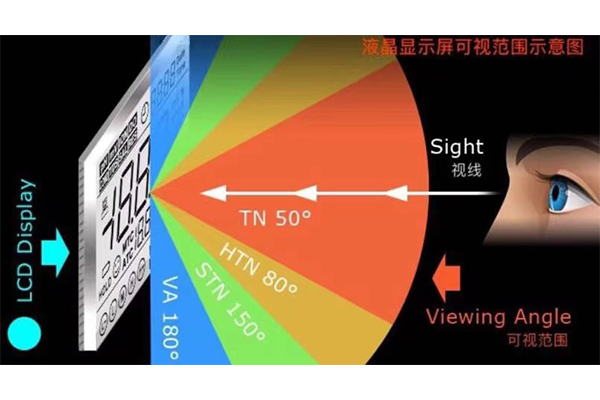
Comparison Table
|
Parameter |
STN LCD Display |
FSTN LCD Display |
|
Twist Angle |
180°–270° |
180°–270° |
|
Compensation Film |
No |
YES |
|
Contrast |
Good |
Excellent |
|
Viewing Angle |
Wide |
Wider |
Common Applications of STN and FSTN LCD Displays
1. STN LCD Display Applications
Given its cost advantages and basic display capabilities, STN LCD display is widely used in low-end devices with minimal visual requirements. Typical use cases include basic calculators, simple remote controls, traditional electronic clocks, low-grade household appliances, basic industrial indicator meters, and legacy low-resolution feature phones. These scenarios only require simple numeric or icon output, making STN’s color tint and low contrast non-impactful to core functionality.
2. FSTN LCD Display Applications
FSTN LCD display dominates mid-tier passive-matrix LCD display applications that demand clear visuals and reliable multi-angle visibility. Its primary use cases cover medical diagnostic devices, automotive instrument screens, industrial control panels, precision testing instruments, smart home control terminals, handheld measuring tools, and high-end consumer electronics. In these devices, screen clarity, data accuracy, and outdoor readability are critical, making FSTN the optimal cost-performance solution.
How to Choose Between STN and FSTN LCD Technology
Selecting between STN LCD display and FSTN LCD display depends entirely on your product’s functional requirements, usage environment, and budget constraints. If your project targets low-cost, simple display output with no strict demands for color accuracy, viewing angle, or high contrast, standard STN LCD technology delivers sufficient performance with maximum cost savings. For products used in complex lighting environments, multi-user viewing scenarios, or professional industrial and medical fields, FSTN LCD display is the superior choice. Its color-neutral visuals, wide viewing angle, high contrast, and excellent sunlight readability greatly improve product usability and grade. For most modern embedded display projects, the minor cost difference between STN and FSTN is negligible compared to the significant upgrade in display quality and user experience.
In the diverse ecosystem of LCD display technology, STN LCD display and FSTN LCD display represent two progressive generations of passive-matrix super-twisted nematic panels. STN laid the foundation for high-density low-power LCD display, while FSTN optimized STN’s inherent optical flaws through film compensation technology, achieving a perfect balance of cost, power consumption, and visual performance. The core difference between STN and FSTN display technology lies in optical compensation design, which directly determines color accuracy, contrast, viewing angle, and practical usability. STN remains a budget-friendly basic display solution, while FSTN has become the mainstream high-quality monochrome LCD option for industrial, automotive, and medical devices.
About Jingda Display Company
With over 10 years of experience in the LCD display industry, Jingda display is a professional manufacturer specializing in the research, development, and production of small to medium-sized display modules. Our product portfolio spans from 0.96-inch to 32-inch TFT LCD modules, capacitive and resistive touch panels, monochrome LCM, and intelligent HMI modules.