

What is the difference between a serial port display and a standard TFT display?
In embedded system design, industrial automation, consumer electronics, displays screen serve as the core human-machine interface (HMI) component. The engineers and product developers frequently face a critical decision: choosing between a serial port display and a standard TFT display. While both deliver visual output for electronic devices, their internal operating mechanisms, hardware interfaces, resource consumption, development difficulty, and application scenarios differ drastically.
What is a Serial Port Display?
A serial port display—often called a "smart serial display," "serial HMI," or "UART TFT display"—is a self-contained module that integrates a TFT LCD panel with a dedicated graphics controller, frame buffer memory, and a serial communication interface. These modules function as complete display subsystems, processing graphical commands received over a serial connection without burdening the host microcontroller. They support mainstream serial protocols including UART, SPI, and I2C, enabling data and instruction transmission through only a few signal wires.
What Is a Standard TFT Display?
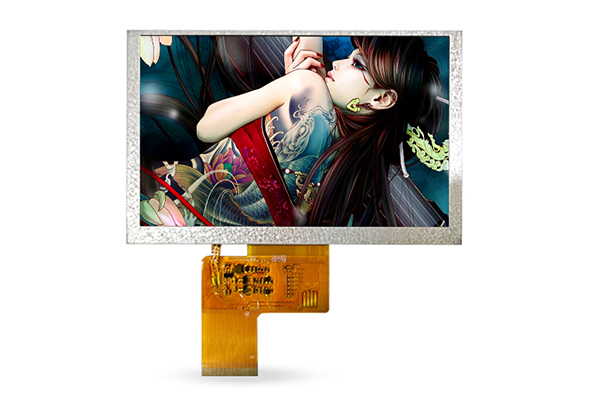
A standard TFT (Thin Film Transistor) display is a pure hardware bare screen based on traditional TFT LCD imaging technology. It is a non-intelligent display component without an independent control system or built-in driver firmware. Standard TFT displays rely entirely on external main controllers to complete all display-related work, including pixel data calculation, frame buffer storage, screen refreshing, and color calibration.
Key Technical Differences Between Serial Port Display and Standard TFT Display
The technical gaps between the two display types cover hardware interfaces, controller resource occupancy, driving difficulty, transmission efficiency, and system stability. These technical differences are the core basis for project selection and directly affect product development cycles and operating performance.
1. Hardware Interface & Wiring Complexity
Serial port displays feature extremely simplified hardware wiring, which is one of their most prominent advantages. Most serial display modules only require 3 to 4 wires for normal operation: power supply, ground wire, and serial communication signal wires. UART-based serial displays only need TX and RX pins for data transmission; SPI and I2C serial displays also complete communication through a minimal number of pins. This ultra-low pin count greatly reduces PCB layout difficulty, saves board space, and avoids complex wiring routing problems.
2. Main Controller Resource Occupancy
Serial port displays are designed for low power consumption and low resource occupancy. Since the display module integrates an independent graphics processing unit and frame buffer, all pixel rendering, data caching, and screen refreshing work is completed by the display’s own chip. The host MCU only needs to send simple control commands at low frequency, with almost no CPU resource occupation.
Standard TFT displays consume massive main controller resources. Without independent caching and processing capabilities, all frame data must be calculated, stored, and output by the host processor. The main controller needs to continuously refresh pixel data, occupy large-capacity RAM for frame buffer storage, and maintain high-frequency signal output.
3. Driving Development Difficulty & Cycle
The development threshold of serial port displays is extremely low. Manufacturers provide complete and mature serial communication protocols, universal command sets, and supporting upper computer debugging tools. Developers do not need to understand underlying LCD driving principles, pixel timing logic, or graphics rendering algorithms. They only need to call simple serial commands to realize functions such as text display, picture switching, animation playback, and touch control.
Standard TFT displays require professional embedded development capabilities and longer development cycles. Developers need to write underlying driver code from scratch, configure screen timing parameters, debug color calibration, build frame buffer management logic, and optimize screen refresh fluency. Different sizes and model TFT screens have different timing parameters and driver requirements, resulting in poor compatibility.
4. Data Transmission Speed and Refresh Performance
Limited by serial communication protocol bandwidth, the refresh rate and data transmission speed of serial port displays are relatively low. UART serial displays have the lowest bandwidth, suitable for static display and low-frequency update scenarios; SPI serial displays have improved speed but still cannot support high-definition full-screen real-time refresh.
Standard TFT displays adopt parallel or high-speed MIPI/RGB interfaces with ultra-high data transmission bandwidth, supporting high-resolution, high-frame-rate screen refresh. They can smoothly display 1080P high-definition images, dynamic videos, and complex animation effects without stuttering.
5. System Stability
Serial port displays have outstanding system stability. The integrated design of the display module reduces external circuit links, and the simple serial wiring effectively avoids signal interference and line failure problems caused by complex parallel wiring.
Standard TFT displays have relatively poor system stability. Complex parallel signal lines are susceptible to external electromagnetic interference, resulting in screen flickering, color distortion, and snowflake noise.
Standard TFT displays offer maximum performance, resolution flexibility, and pixel-level control at the cost of increased development complexity, higher pin count, and greater demands on the host processor. They are the right choice for high-performance applications, custom graphics requirements, and projects where every aspect of the display must be tightly controlled.
Serial port displays prioritize ease of use, rapid development, and minimal host resource consumption at the cost of reduced bandwidth and resolution limitations. They excel in industrial HMI applications, prototyping, resource-constrained systems, and projects where time-to-market
is critical.