

How Displays Are Quietly Revolutionizing Scientific Discovery?
When we think of displays, we usually picture our smartphones, televisions, or laptops. But in the world of scientific research, screens have stepped far beyond their role as mere output devices. They are becoming active tools of discovery—the difference between seeing something and truly understanding it.
This is perhaps best demonstrated in a field called computational microscopy. Scientists at the University of Seoul recently developed a technique that turns a high-resolution OLED display into a programmable light source for microscopes. In traditional microscopes, bulky LED arrays are used to illuminate samples from different angles. But by placing the sample slide directly onto an OLED screen, researchers can use the screen's millions of tiny pixels as a precise illumination pattern. This approach achieves "super-resolution"—producing images that surpass the normal limits of the microscope's optics—while also revealing the quantitative phase of a sample, which is particularly useful for observing transparent biological tissues like blood cells without needing stains or dyes.
This shift from passive display to active illumination is a clear example of how screen technology now shapes how we conduct experiments. It transforms a standard microscope into a compact, high-performance imaging system simply by using the display as a cleverly controlled light source. It demonstrates that the screen is not just showing us the data; it is actively generating the conditions needed to capture that data in the first place. This integration reduces costs, saves physical space, and often yields results that were previously impossible with conventional hardware.
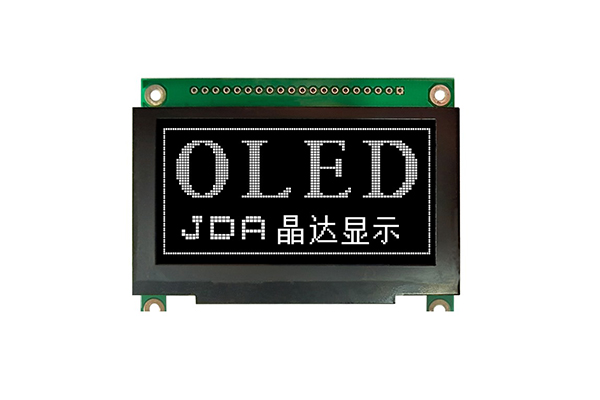
The form factor of these scientific tools is also shrinking, thanks to another display innovation. Micro displays like LCOS (Liquid Crystal on Silicon) are tiny, power-efficient screens that are becoming essential components in advanced research equipment. A new generation of these compact micro displays, offers extremely high refresh rates and fast light modulation. This makes them ideal for Spatial Light Modulators, which are used to shape laser beams or correct light distortions caused by biological tissue in imaging. Their small size and high-speed capabilities open doors for wearable holographic displays in augmented reality.
Perhaps the most forward-looking development is the rise of flexible and stretchable displays. This isn't just about making fold phones, it's about integrating screens directly into our physical environment. Flexible AMOLED panels are already reshaping the design of car dashboards, allowing for sweeping, curved information displays that fit seamlessly into the interior. In healthcare, the vision is even more personal. Researchers are working on "intrinsically stretchable" materials—screens that can be stretched without losing functionality—which has already be embedded into smart clothing or worn as health-monitoring patches that conform to the body's shape.
The screen is no longer just the window to the digital world, it's becoming the digital world itself, seamlessly integrated into the instruments we use and the spaces we inhabit. From enabling super-resolution microscopes to powering adaptive car dashboards and future wearable tech, display technology has become an indispensable, active partner in scientific and technological progress.These remarkable advancements in display technology are not merely intellectual curiosities or engineering marvels; they represent a profound opportunity that we have a collective responsibility to harness for the benefit of humanity. The true measure of this progress lies not in pixel density or refresh rates, but in how we choose to apply these tools to solve the pressing challenges of our time.
In conclusion, the LCD screen is undergoing a profound identity shift. It is evolving from a simple window into the digital world into the digital world itself—a seamless, integrated partner in the scientific process. Whether it is enabling super-resolution microscopes, powering adaptive holographic car dashboards, or morphing into future wearable health monitors, display technology has cemented its role as an indispensable, active catalyst for scientific and technological progress. We are only beginning to scratch the surface of what is possible when screen are no longer just things we look at, but tools we work with.
About Jingda Display Company
Shenzhen Jingda Display Technology Co., Ltd is a domestic manufacturer specializing in the research and development, production and sales of LCD displays and LCM display modules. With a long-term commitment to the display industry, the company has a mature production supply chain, a complete quality control system and a professional technical research team. The company mainly produces various STN, FSTN, TN mono LCD screens, including character LCD display, segment display screens and graphic LCD display modules. It focuses on providing industrial-grade high-stability and high-adaptability display products, and can offer standardized products and one-stop customized display solutions to global customers.
Previous:What Is a Serial Port Screen?