

What is In-cell and On-cell Technology?
In the iterative process of the global display industry, TFT display (thin-film transistor display) has always been the mainstream and core display carrier in fields such as consumer electronics, vehicle-mounted displays, and industrial terminals. The traditional TFT display module adopts a stacked structure with the touch layer and display layer separated, which has many drawbacks such as excessive thickness, insufficient light transmittance, touch offset, and redundant structure, making it difficult to meet the current demands for lightweight, high-definition, and high-touch experience in product development. To address the technical bottlenecks of the traditional module, the industry has gradually evolved into two integrated touch display solutions: In-cell technology and On-cell technology.
TFT display is an active matrix display screen driven by thin-film transistors. Its core structure includes TFT substrate, liquid crystal layer, color filter, polarizer, protective glass and other core units. With its fast response speed, high contrast ratio and stable picture quality, it has become the core technology base of LCD displays and is also the compatible carrier for In-cell and On-cell technologies.
The traditional TFT LCD touch module adopts a separated structure such as G+G and G+F. The display panel and the touch sensor are independent components, assembled through optical adhesive. The overall number of layers is large and the stacking thickness is high. This not only affects the thinness of the device, but also easily causes problems such as parallax, light reflection, and touch delay. The core breakthrough of In-cell technology and On-cell technology lies in integrating the touch sensing electrodes directly into the internal structure of the TFT display, eliminating the independent touch panel and achieving the integration of display and touch.
What is On-cell Technology?
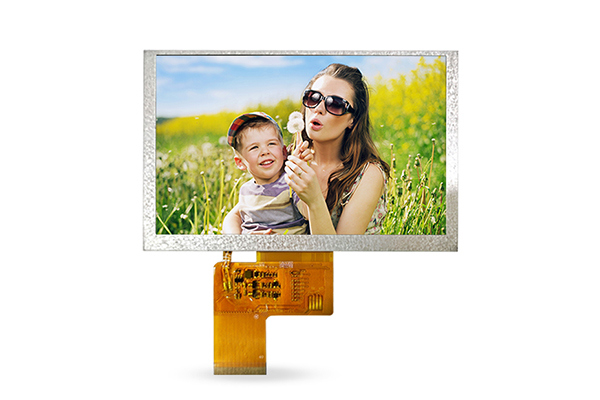
On-cell technology belongs to the medium-integration touch solution. The technical principle involves fabricating touch sensing electrodes on the upper layer of the TFT display color filter and on the lower layer of the polarizer. The touch layer is attached to the surface structure of the display panel, without penetrating into the core liquid crystal area. This structure retains the complete liquid crystal display unit and TFT drive architecture of the TFT display, with only the touch sensing structure superimposed on the outside of the display layer. It has moderate integration difficulty and strong structural stability, serving as a transitional optimization solution between traditional separate touch and high-end in-cell touch.
What is In-cell Technolgy?
In-cell technology is a highly integrated touch display technology and currently the most integrated touch solution in the LCD industry. This technology directly embeds touch sensing electrodes and touch scanning lines inside the liquid crystal cell of the TFT display, deeply integrating with the TFT pixel drive circuit and liquid crystal layer. The touch sensing unit and display pixel unit share some underlying structures, significantly reducing the number of screen stacking layers. Compared to On-cell technology, In-cell has a deeper integration dimension, a more streamlined structure, and a comprehensive upgrade in optical performance and touch accuracy. However, it requires higher standards for TFT panel manufacturing processes and yield control.
The Advantages of On-cell technology
The structure is streamlined, achieving a lightweight upgrade of the screen.
The traditional separate TFT touch sensor module consists of multiple layers such as protective glass, touch sensor, optical adhesive, and display panel. The overall thickness is generally over 1.8mm, occupying a large amount of space inside the device. The On-cell technology eliminates the independent touch glass substrate, directly fabricating the touch electrodes on the surface layer of the TFT display color filter, significantly reducing the number of screen stack layers and the lamination process. The optimized On-cell TFT display module can be controlled to a thickness of less than 1.5mm, and the overall weight of the device is simultaneously reduced by 10% to 15%.
The process is mature and stable, with controllable production costs.
In the LCD production system, the On-cell technology has extremely strong process compatibility. There is no need for large-scale renovations to the traditional TFT display production line. Only the addition of touch electrode coating and etching processes after the color filter production can complete the integration. Compared with the complex In-cell technology, the production yield of On-cell is higher, the process fault tolerance is stronger, and the production stability has been verified through years of market testing.
The structure has strong resistance to damage and the overall reliability is higher.
The on-cell touch layer is located on the surface structure of the TFT display and is independent of the internal liquid crystal layer and the TFT driving circuit. This forms a natural protective structure. When the screen is subjected to external force compression, slight bumps, or bending stress, the touch sensing layer will not directly impact the core display unit, effectively protecting the liquid crystal layer and the TFT pixel circuit from damage. At the same time, this technology avoids the air gap problem of the traditional bonding process, reduces phenomena such as delamination and blistering, and the screen's pressure resistance and bending resistance performance are significantly superior to the early integrated solutions, suitable for complex usage scenarios such as vehicles and industries.
The touch performance is balanced and suitable for all scenarios of use.
The touch electrodes of On-cell technology are close to the surface of the screen. The touch sensing distance is short and the signal transmission loss is low. Compared with traditional separated screens, the touch response speed is faster and the positioning accuracy is higher, effectively reducing problems such as touch offset and failure.
The Advantage of In-cell Technology
Ultra-thin design, redefining the upper limit of screen structure.
The in-cell technology integrates the touch sensing unit completely into the TFT display liquid crystal box, integrating the TFT pixel driving circuit and the liquid crystal layer together. It completely eliminates the independent touch layer and redundant bonding structure, and is currently the technical solution with the fewest stacking layers and the most compact structure for TFT LCD screens.
Top-notch optical performance, delivering a lossless picture quality experience.
Optical performance is the most core advantage of In-cell technology. As it completely eliminates the external touch glass and the adhering adhesive layer, there are no additional optical media inside the screen, minimizing light transmission loss to the lowest level. The light transmittance can reach 88%-92%, far exceeding that of On-cell and traditional touch screens.
The touch experience is extremely smooth, with response accuracy leading the industry.
The touch electrodes of In-cell technology are deeply integrated with the display pixels, reducing the sensing distance to an extreme level. The touch signal transmission path is the shortest and has the lowest loss. Compared with On-cell technology, the touch response speed has increased by more than 20%, with lower response delay, completely eliminating touch lag and sluggishness phenomena.
With the continuous upgrading of the global display industry, On-cell technology, due to its mature and stable performance, as well as its high cost-effectiveness, continues to hold a dominant share in the mid-range display market, supporting the iterative upgrade of consumer electronics and industrial display equipment; while In-cell technology, relying on its unparalleled performance advantages, continuously breaks through process bottlenecks. With the continuous improvement of production yield and the gradual reduction of costs, it is gradually penetrating into more scenarios such as mid-to-high-end vehicles, smart home appliances, and portable terminals.
From a long-term industry perspective, the core iterative directions for TFT displays remain slimness, high definition, low power consumption, and high touch accuracy. In-cell and On-cell two types of integrated touch technologies are not in a substitutive relationship but rather form a complementary and symbiotic industry technology system. Each of them, leveraging its core advantages, covers the entire range of display needs from mid-range civilian and industrial commercial to high-end flagship products, continuously driving technological innovation and product upgrades in the LCD display industry, and also serving as the core technical support for future differentiated competition in intelligent display terminals.