

How to Distinguish Between LCD and LED?
In the modern display industry, LCD display and LED display are the two most dominant visual output technologies, widely deployed in consumer electronics, industrial control equipment, automotive instrumentation, commercial signage, and smart home devices. For procurement engineers, product designers, and industry purchasers worldwide, distinguishing between LCD and LED displays accurately is critical for optimizing product performance, controlling costs, and improving equipment stability. Many market users mistakenly regard LCD and LED as two completely independent display technologies with opposite working mechanisms.
Basic Definition and Core Working Principle
1. Fundamental Mechanism of LCD Display
LCD, short for Liquid Crystal Display, is a passive display technology that relies entirely on external light sources to present images. The core functional layer of an LCD display is liquid crystal molecules sealed between two layers of polarized glass substrates. Liquid crystal molecules do not emit light spontaneously; instead, they adjust their arrangement and torsion angle under the action of driving voltage, precisely controlling the transmittance of backlight. By matching with color filter layers or light shielding layers, the display screen can present different grayscale, color, and text images.
2. Technical Attributes of LED Display
LED stands for Light Emitting Diode. Strictly speaking, commercial LED displays on the market are divided into two categories: active self-emissive LED screens and LED-backlit LCD screens, which is the key point that most users confuse. The so-called LED display referred to in daily comparison scenarios is mostly an upgraded version of the traditional LCD display, which replaces the CCFL backlight of the LCD display with LED lamp beads as the new backlight source.
In-depth Analysis of Core Differences Between LCD and LED
1. Backlight System and Light-emitting Mode
The backlight system is the primary difference between traditional LCD display and LED display. Standard LCD industrial screens and early civil displays use CCFL backlights. This backlight mode relies on fluorescent gas discharge to generate uniform light, with the advantages of low cost and mature technology. However, it has obvious defects: high power consumption, slow startup response, short service life, and poor low-temperature resistance, which limits its application in high-end and extreme environment equipment.
2. Structural Composition and Integration
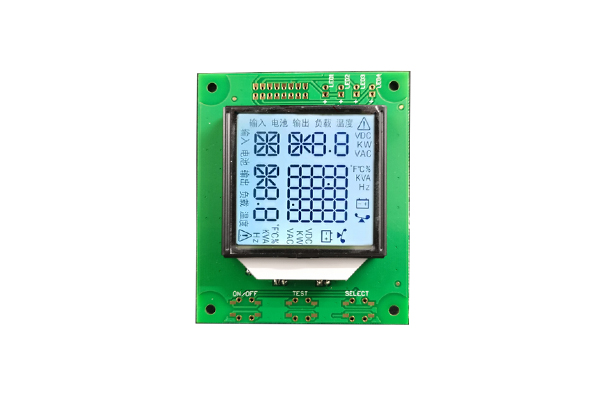
In industrial display scenarios, LCM module is the most common carrier of LCD display technology. LCM (Liquid Crystal Module) is an integrated module formed by bonding the LCD display panel, driving IC, flexible circuit board, backlight assembly, and structural frame. It is a complete display unit that can be directly embedded in equipment after simple power supply and signal docking.
Traditional LCD-based LCM module has a compact and standardized structure, with complete specifications ranging from 0.96-inch small screens to 15-inch industrial control screens. It supports customized resolution, viewing angle, and brightness, and is widely used in instrumentation, household appliances, and industrial automation equipment. In contrast, LED display modules are mostly assembled by discrete lamp beads and driving boards, with larger overall volume and higher integration difficulty in small-size scenarios.
3. Display Effect and Image Performance
In terms of display performance, LED displays have obvious advantages in contrast, brightness, and color gamut. Traditional CCFL-backlit LCD display has low contrast, easy light leakage at the screen edge, and limited color restoration ability, so the picture is soft but lacks layering. LED-backlit displays can realize precise local dimming, effectively improving black field purity and picture contrast, with more vivid color rendering and higher screen brightness, adapting to strong light environments such as outdoor commercial displays and vehicle-mounted screens.
How to Choose LCD or LED Display in Actual Projects
For projects that require low power consumption, long-term stable operation, low cost, and high color accuracy, LCD display is the preferred solution. Especially in industrial control instrumentation, portable battery equipment, and low-end display scenarios that only need text and simple graphics, monochrome LCD display matched with customized LCM module can maximize cost performance and equipment stability.
For outdoor display, large-size splicing, high-brightness anti-glare, high contrast, and vivid color display scenarios, LED displays are more suitable. For example, commercial advertising screens, stage display screens, vehicle-mounted high-brightness screens, and high-end consumer display devices can give full play to the advantages of LED backlight technology in visual effect and environmental adaptability.