

What is the advantage of SPI and IIC interface for Graphic LCD Display?
In modern embedded system design, industrial control, smart home equipment, and wearable electronic products, graphic lcd display modules have become indispensable human-computer interaction carriers. Among all mainstream display interfaces, SPI and IIC are the two most widely adopted solutions for dot matrix LCD screens, dominating the market of small and medium-sized LCD displays due to their unique structural advantages, stable performance, and excellent compatibility. Selecting a suitable interface for an IIC interface display or SPI display directly determines the equipment’s response speed, power consumption, PCB layout difficulty, and overall service life.
Graphic LCD displays differ from segment LCD screens in that they support arbitrary pixel dotting, custom graphic rendering, dynamic text scrolling, and multi-layer interface display, putting forward higher requirements for interface transmission efficiency and signal stability. In contrast, SPI and IIC serial interfaces simplify wiring design, optimize transmission protocols, and perfectly match the low-cost, high-stability, and compact design demands of mainstream terminal products, becoming the preferred interfaces for current mainstream dot matrix LCD displays.
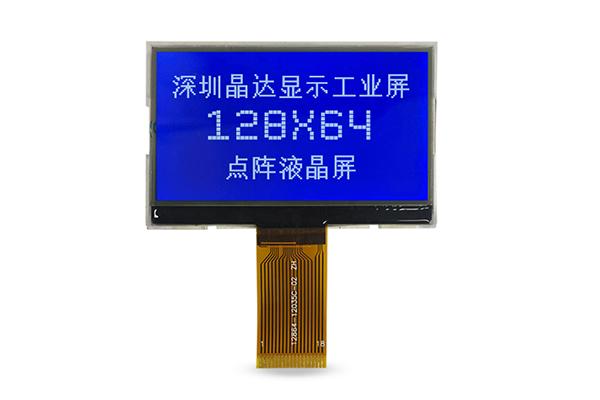
SPI Interface Basic Characteristics (SPI Display)
SPI (Serial Peripheral Interface) is a high-speed synchronous serial communication interface, a master-slave structured full-duplex transmission protocol, and the core mainstream interface of high-performance SPI display products. The standard SPI interface for dot matrix LCD screens adopts a 4-wire structure, including SCLK (clock signal), MOSI (data transmission), CS (chip selection), and DC (data/command selection). Some simplified 3-wire SPI designs integrate DC signals into data lines, further reducing pin count while retaining high-speed transmission capabilities.
IIC Interface Basic Characteristics (IIC Interface Display)
IIC (Inter-Integrated Circuit) is a half-duplex synchronous serial bus interface with an ultra-simplified 2-wire structure, composed of SCL (clock line) and SDA (data line). As a multi-device bus interface, an IIC bus can mount multiple display modules and sensor devices with different addresses, which is the core advantage of IIC interface display products in multi-device integrated systems.
The Advantages of SPI Interface for SPI Graphic LCD Display
1. Ultra-high Transmission Speed, No Dynamic Display Lag
The biggest advantage of SPI interface lies in its ultra-high clock frequency and zero protocol overhead. Different from the IIC interface’s address verification and response waiting mechanism, SPI adopts a continuous burst transmission mode, with a maximum clock frequency of up to 80MHz. For mainstream 128x64, 160x128, 240x320 dot matrix LCD displays, the SPI interface can complete full-screen data refresh within 1-5ms.
2. Strong Anti-interference Performance, Suitable for Industrial Scenarios
Our industrial-grade graphic lcd display with SPI interface adopts push-pull drive signal output, with strong signal anti-interference ability and stable transmission in high-noise electromagnetic environments such as industrial workshops and power equipment. Compared with the open-drain structure of the IIC interface, the SPI signal has stronger driving ability, longer effective transmission distance, and is not prone to signal distortion or data loss.
3. Flexible Wiring Design, Balancing Performance and Integration
The standard 4-wire SPI interface and simplified 3-wire SPI interface both maintain a low pin count design, far fewer than traditional parallel LCD interfaces. While retaining high-speed transmission performance, it avoids the problem of excessive GPIO resource occupation. For embedded systems with limited single-chip microcomputer pins but high display performance requirements, SPI display modules can perfectly balance hardware cost and display effect.
4. Ultra-low Pin Occupation, Greatly Simplifying PCB Design
The IIC interface only needs two signal lines (SCL, SDA) to complete display data transmission, which is the lowest pin count among all mainstream display interfaces. For ultra-miniaturized devices such as wearable devices, smart sensors, and miniature household appliances with extremely limited GPIO resources, IIC interface display modules can save a large number of single-chip microcomputer pins, avoiding the need to expand peripheral chips due to insufficient pins.
SPI and IIC interfaces are both core serial transmission solutions for modern dot matrix graphic LCD display products, with their own irreplaceable advantages. SPI display modules rely on high-speed transmission, strong anti-interference, and excellent dynamic display performance, becoming the preferred choice for industrial high-performance and dynamic display scenarios. IIC interface display products take advantage of ultra-simple wiring, low power consumption, and strong expandability, dominating miniaturized, low-power, and multi-device integrated application scenarios.