

What are the Factors that Affect the Power Consumption of Monochrome LCD Civilian Screen?
Power consumption is one of the most critical considerations when selecting a display for battery-operated or energy-sensitive applications. For engineers developing portable medical devices, industrial control panels, IoT sensors, or outdoor equipment, understanding exactly what drives power usage in monochrome LCD displays can mean the difference between a product that runs for weeks on a single charge and one that fails in the field.
Monochrome LCD displays are widely regarded as energy-efficient display solutions. Without backlighting, these displays often consume only microwatts to low milliwatts of power. However, once you add backlight or scale up to larger panels, power consumption can increase dramatically. This guide breaks down every factor that impacts monochrome LCD power draw, providing actionable insights for hardware designers and product developers.
Backlight Technology and Design
In most monochrome LCD applications, the backlight is the primary factor contributing to overall power consumption. Industry data shows that the backlight component can account for as much as 99% of the total energy consumption of LCDs. For designers focused on energy efficiency, understanding the pros and cons of different backlight technologies is crucial.
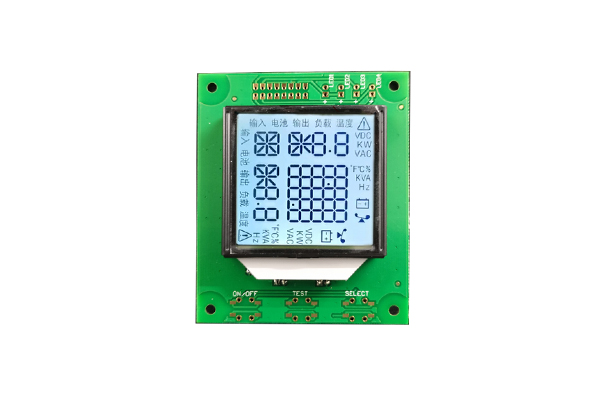
Transflective, Reflective, and Transmissive Displays
The way a monochrome LCD uses ambient light also impacts backlight power consumption. Displays are categorized into three types based on their light transmission and reflection properties, each with different power requirements:
Reflective Monochrome LCDs: Reflective displays do not require a backlight in well-lit environments, as they reflect ambient light to make the display visible. This makes them the most energy-efficient type of monochrome LCD, with power consumption limited to the display driver circuit (often just a few microamps). Reflective LCDs are ideal for outdoor applications, such as digital thermometers or solar-powered devices, where ambient light is abundant.
Transflective Monochrome LCDs: Transflective displays combine reflective and transmissive properties, using ambient light in bright environments and a backlight in low-light conditions. This balance makes them versatile for both indoor and outdoor use while minimizing power consumption. Transflective LCDs typically use a dimmer backlight than transmissive displays, reducing energy usage by 30 to 50% compared to fully transmissive screens.
Transmissive Monochrome LCDs: Transmissive displays rely entirely on backlighting to be visible, even in bright environments. This makes them the most power-hungry type of monochrome LCD, as the backlight must be kept on at all times. Transmissive LCDs are used in applications where visibility in low-light conditions is critical, such as medical devices or indoor control panels, but they are not ideal for battery-powered devices.
Conclusion
Monochrome LCD power consumption is governed by multiple interacting factors, but backlight design remains the dominant influence. By understanding the relationship between display size,impedance, driver IC selection, operating voltage, refresh frequency, temperature conditions, and content switching patterns, engineers can make informed decisions that optimize battery life without sacrificing display performance.
Shenzhen Jingda Display Technology Co., Ltd is professional monochrome LCD display manufacturer in Shenzhen, China. Jingda display has a rich experience in LCD field for 10+ years. If you are looking for monochrome LCD displays, TFT LCD displays and OLED displays, please contact JDA’s sales team and we will provide you with technical support.