

The Digital Canvas: Revolutionizing Retail with Modular LCD Video Wall Displays
In the modern retail landscape, static signs are rapidly becoming relics of the past. The contemporary consumer walks into a space expecting not just products, but an experience of entering the LCD video wall, the modular bar-type display. These are not simply screens; they are a versatile visual language that allows brands to communicate with unprecedented creativity and precision. Whether transforming a bland store into an immersive digital gallery or functioning as independent information center, these displays are redefining the retail environment.
The technology behind these modular LCD displays, highlighting their dual capability to function as a unified canvas or as individual data streams, and this flexibility creates unparalleled value for businesses.
The Architecture of a Digital Canvas
At its core, an LCD video wall display is a sophisticated visual system composed of multiple commercial-grade LCD panels arranged together to form one large, high-impact screen. The magic lies in the "splicing" technology that connects these panels. Through specialized video wall controllers and content management software, each panel acts as a tile within a larger matrix, working in perfect harmony to create a overall image.
What makes this solution stand out in a retail setting is the engineering precision that minimizes the visual interruption between screens. Modern ultra-narrow bezel designs measure less than one millimeter, with some professional models featuring bezels as slim as 0.44mm. This creates virtually imperceptible seams, ensuring that the content maintains its integrity and delivers an immersive viewing experience without dark lines fragmenting the visual content. This technology ensures that when a high-resolution image of a luxury car or a flowing landscape is displayed across the wall, it appears as one continuous, breathtaking picture rather than a grid of separate monitors.
Two Modes of Engagement: The Split and the Whole
The true genius of the modular LCD display is its ability to pivot between two entirely different operational modes, providing maximum return on investment for retailers.
The first mode is the "Canvas Mode." Here, the multiple screens synchronize to act as a single, massive display. Through high-precision synchronization protocols—capable of achieving sub-millisecond multi-screen synchronization—the panels process content distribution to ensure perfect image alignment and timing. Imagine walking through the main entrance of a department store and being greeted by a seamless 4K or even 8K UHD image spanning a 3x3 grid of screens. The resolution is so high and the brightness so uniform that the image feels alive. This feature allows brands to broadcast high-impact commercials, launch new products with cinematic flair, or display artistic content that sets the tone for the entire shopping experience. The ability to tile screens to form a single image is a significant advantage over traditional displays, allowing for a virtually unlimited screen size that can adapt to any architectural space.
The second, and equally powerful, mode is "Independent Mode." This is where the LCD panels divide and conquer. When they are not acting as one large screen, they can be deconstructed into separate, independent displays. This functionality is critical for practical, day-to-day retail operations. A 2x2 video wall, for instance, can simultaneously display four different Full HD sources. One screen can show a promotional video, the second can list current deals, the third can feature social media feeds, and the fourth can provide way finding information. This "big variable is also variable small" capability allows retailers to use the same physical hardware for brand storytelling and practical communication, maximizing the utility of their investment.
The Rise of the "Stretched" Display
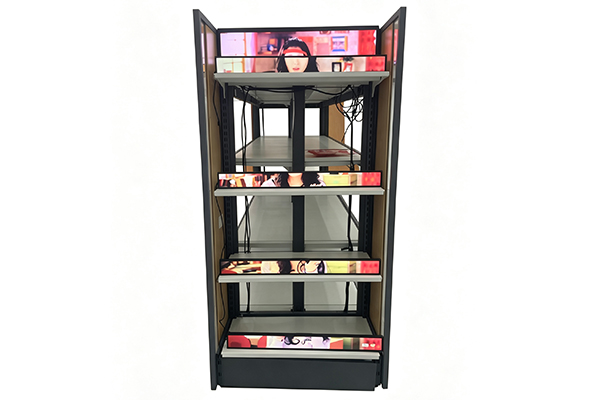
While large video walls capture attention in lobbies, the retail shelves themselves are becoming smarter thanks to the evolution of bar-type or "stretched" LCD displays. These ultra-long, narrow displays are designed for integration at the edge of retail shelves, acting as dynamic digital price tags and advertising players.
These bar-type displays are essentially a form of LCD video wall technology applied to a smaller scale. They can be customized to fit the specific length of a shelf, creating a digital strip that runs along the commodity. This not only allows for dynamic pricing updates a massive operational benefit—but also enables the display of moving graphics, QR codes, and promotional messages that catch the consumer's eye far more effectively than a static paper label.
Like their larger counterparts, these displays can also be synchronized. For example, a row of shelf-edge screens can be configured to display a continuous, scrolling message across the aisle, creating a sense of motion and urgency that guides the customer's attention. They also highlight the scalability of LCD splicing technology. A chain convenience store that deployed these displays was able to reduce stock-out losses by 65% and increase price adjustment efficiency by 90% through real-time inventory synchronization.
The Critical Role of Advanced Controllers
1. The seamless transition between these modes is orchestrated by advanced video wall controllers. These processors handle the heavy lifting of resolution scaling, bezel compensation, and synchronization to maintain perfect timing across all panels. Some proprietary systems utilize a "phase-locked loop (PLL) synchronization methodology" to eliminate screen tearing and refresh lag across massive arrays, ensuring that the final image is flawless.
2. These systems are supported by robust software that allows for remote content control, scheduling, and real-time data feeds. This means a marketing manager can, from a central location, schedule a high-impact video wall presentation for the morning rush and switch to a grid of independent product commercials for the afternoon lull. The technology essentially eliminates the need for manual intervention, reducing operational costs and ensuring that the content is always fresh and relevant.
3. The shift from static signage to modular LCD displays represents a fundamental evolution in how businesses communicate with customers. The ability to seamlessly splice multiple screens into a single, mesmerizing canvas, or divide them into a dynamic array of independent information portals, offers a level of creative and operational flexibility previously unattainable.
4. Whether it is the "wow factor" of a video wall in a corporate lobby, the immersive clarity of a 4K UHD display in a high-end retail store, or the dynamic efficiency of shelf-edge bar displays in a supermarket, the message is clear. These modular display systems are not just a technology upgrade; they are a strategic tool that drives engagement, streamlines operations, and allows brands to paint their story in the most compelling light possible. As technology continues to push the boundaries of resolution and synchronization, the only limit to what these digital canvases can achieve is the imagination of the marketer.
If you are looking for stretched bar displays for your project, welcome to contact Jingda Display Team and provide you with technical support.