

Why Are TN-IPS Displays Becoming the New Standard for High-Performance Screens?
A TN-IPS display integrates the ultra-fast response characteristics of Twisted Nematic (TN) technology with the wide-angle color accuracy of In-Plane Switching (IPS), forming a hybrid engineering approach that targets speed, clarity, and visual fidelity in a single panel. This type of display is built for users who need high refresh rates, broad color reproduction, and stability across professional and commercial environments. The core purpose of this discussion is to examine how TN-IPS works, why it is gaining traction in global markets, and what measurable advantages it delivers in real-world applications.
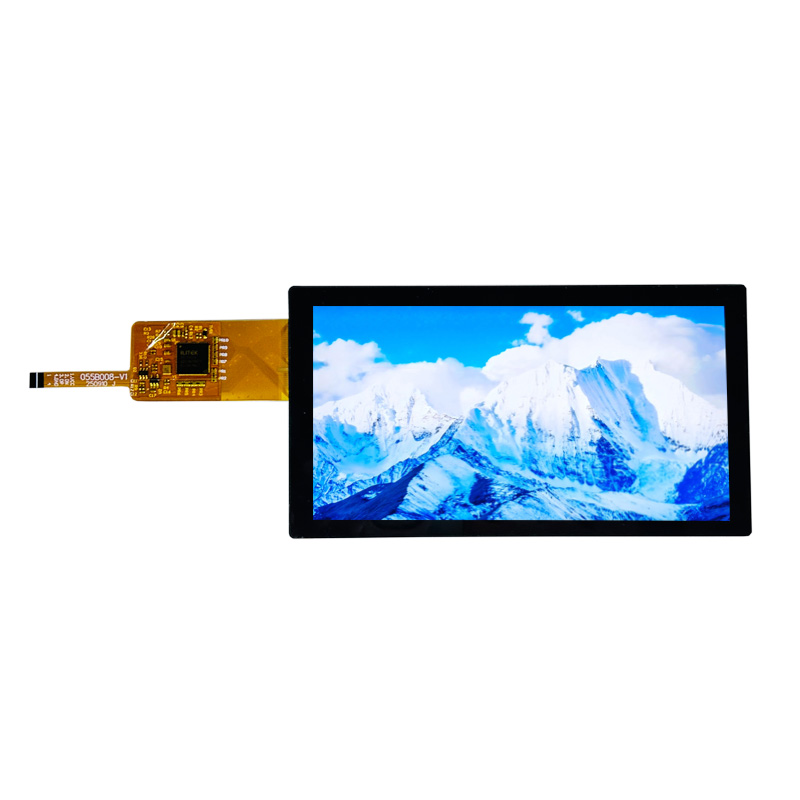
To equip buyers, integrators, and decision-makers with technical clarity, the following table summarizes key performance parameters commonly featured in advanced TN-IPS displays:
TN-IPS Display Technical Parameters
| Specification | Technical Description |
|---|---|
| Panel Type | Hybrid TN-IPS panel combining fast response and wide viewing angles |
| Refresh Rate | 60Hz – 240Hz depending on configuration |
| Response Time | 1ms–5ms (GtG optimized) |
| Resolution Options | 1280×1024, 1920×1080, 2560×1440, 3840×2160 |
| Viewing Angle | 178° (H) / 178° (V) |
| Color Gamut | 95%–100% sRGB, optional wide-gamut versions |
| Brightness | 250–500 cd/m² |
| Contrast Ratio | 1000:1 – 1500:1 |
| Interface Options | HDMI, DP, VGA, LVDS, eDP |
| Backlight | LED with long-life low-power architecture |
| Operating Temperature | -20°C to +70°C (industrial models) |
| Application Range | Gaming, industrial equipment, medical devices, kiosks, office workstations |
How Does the TN-IPS Hybrid Structure Improve Real-World Display Performance?
TN-IPS panels merge complementary technologies. While TN excels in speed, IPS provides color stability and viewing consistency. By integrating both, display engineers reduce performance trade-offs. The hybrid alignment minimizes light leakage, accelerates pixel transitions, and broadens visible angles, allowing the panel to maintain uniform color even when viewed from extreme positions. This dual-benefit architecture explains why the TN-IPS category is rising across professional and consumer markets.
How Do TN-IPS Displays Deliver Performance Advantages Across Different Use Cases?
To understand the advantage of TN-IPS, it is essential to examine core performance categories and how the hybrid architecture restructures them.
1. How does TN-IPS optimize response time for fast-moving visual environments?
TN-IPS panels leverage TN-driven pixel rotation to achieve quick transitions. This reduces ghosting and motion blur, especially at refresh rates above 120Hz. In gaming, simulation, and security monitoring environments, the faster gray-to-gray switching enhances clarity during rapid motion.
2. Why does TN-IPS produce more accurate color reproduction compared to traditional TN?
The inclusion of IPS structural elements allows light to travel more uniformly across subpixels. This leads to richer color saturation, minimized distortion, and more consistent image quality. Professionals in design, medical imaging, and digital signage benefit from this stability.
3. What viewing-angle advantages does TN-IPS provide?
Traditional TN displays suffer color shifting when viewed off-axis. TN-IPS improves light modulation through horizontal crystallization, maintaining image accuracy up to 178° both horizontally and vertically. This makes it suitable for multi-viewer environments such as conference displays and kiosk applications.
4. How does TN-IPS achieve balanced cost-performance for commercial integration?
Manufacturers can deliver IPS-like quality at a more manageable cost structure thanks to optimized TN layers. This balance of image fidelity, speed, and affordability makes the technology appealing for large-scale industrial deployments and long-term supply chains.
How Will TN-IPS Display Technology Evolve in Future Markets?
The evolution of TN-IPS displays is shaped by demands for clarity, environmental efficiency, and adaptive integration. Several projected trends reveal how this hybrid technology will expand in the next five to ten years.
1. Why is TN-IPS expected to expand into high-refresh professional sectors?
Advancements in pixel-transition algorithms are enabling 240Hz+ TN-IPS panels to enter competitive gaming, military simulation, and industrial robotics displays. As latency requirements drop below 1ms, the hybrid model becomes more competitive against pure IPS and VA.
2. What future improvements in color and brightness are anticipated?
Enhanced quantum-dot backlighting and refined IPS alignment patterns are expected to push color coverage beyond 100% sRGB into 95%–98% DCI-P3 territory. This expands the display’s suitability for professional color-critical industries.
3. How will TN-IPS improve energy efficiency?
Next-generation LED backlight modules reduce energy consumption by up to 20% while improving brightness stability. This supports applications in medical equipment, portable monitors, transportation systems, and solar-powered industrial devices.
4. Why will TN-IPS become more adaptable to rugged environments?
Industrial-grade TN-IPS displays will incorporate reinforced glass, anti-UV coatings, and wider operating temperatures. Demand from agriculture automation, factory control panels, outdoor kiosks, and smart transportation will accelerate this trend.
5. What role will customization play in the TN-IPS market?
As OEM and ODM needs rise, TN-IPS panels will offer customizable brightness, touch integration, aspect ratio, and interface configurations. Enterprises prefer adaptable modules that match unique equipment specifications without compromising performance.
Common Questions About TN-IPS Displays
Q1: How does a TN-IPS panel differ from pure IPS and pure TN?
A TN-IPS panel combines the rapid response of TN with the wide viewing angles and accurate color reproduction of IPS. Unlike pure TN, TN-IPS reduces color shifting and increases visual consistency. Compared to pure IPS, it offers improved speed and often lower power consumption while maintaining IPS-level transparency and clarity.
Q2: Why is TN-IPS considered a strong choice for commercial and industrial applications?
TN-IPS provides a balanced combination of speed, stability, and durability. Industrial devices benefit from its extended temperature tolerance, long-life LED backlight, and improved resistance to visual degradation. Commercial installations appreciate its viewing-angle uniformity, which ensures consistent visibility for customers and operators.
Why TN-IPS Displays Are Positioned to Lead the Next Display Generation
TN-IPS technology is expanding because it offers an effective balance of clarity, speed, and color accuracy. Its hybrid architecture supports demanding environments, from gaming to industrial automation, while delivering reliable long-term performance and cost efficiency. As global markets prioritize energy efficiency, visual precision, and flexible customization, TN-IPS displays are emerging as a practical solution that meets both professional and commercial needs.
Manufacturers like JINGDA-DISPLAY continue to advance TN-IPS engineering with custom modules, wider-temperature industrial solutions, and optimized optical performance for global integrators. To explore panel customization, technical specifications, or bulk production inquiries, contact us for comprehensive support and professional consultation.