

The Advantages of COG and COB Technologies in LCD Display
In the superior LCD display quality and structural diversity of modern LCD screens, packaging and bonding technologies play a decisive role in optimizing product performance, size, durability, and application scalability. Among all mainstream LCD bonding solutions COG (Chip on Glass) and COB (Chip on Board) are the two most widely adopted core technologies, each with unique structural designs and targeted advantages for different application scenarios.
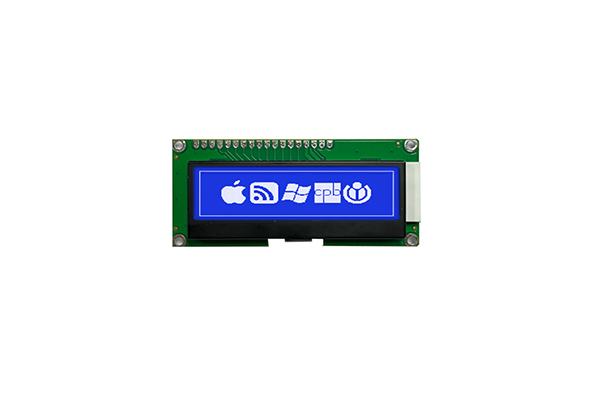
What is COG Technologies?
COG (Chip on Glass) technology is a miniaturized bare chip bonding process. It directly mounts the unpackaged LCD driver IC on the transparent glass substrate of the LCD screen through ultra-fine solder bumps and anisotropic conductive film (ACF). This process eliminates traditional packaged chips, pin headers, and intermediate PCB connection structures, achieving direct integration of the driver chip and the LCD glass panel. It is a lightweight, highly integrated bonding technology tailored for compact and high-precision display devices.
What is COG Technologies?
COG (Chip on Glass) technology is a miniaturized bare chip bonding process. It directly mounts the unpackaged LCD driver IC on the transparent glass substrate of the LCD screen through ultra-fine solder bumps and anisotropic conductive film (ACF). This process eliminates traditional packaged chips, pin headers, and intermediate PCB connection structures, achieving direct integration of the driver chip and the LCD glass panel. It is a lightweight, highly integrated bonding technology tailored for compact and high-precision display devices.
What is COB Technologies?
COB (Chip on Board) technology is a classic board-level chip bonding solution. It adheres the bare driver IC to a custom PCB circuit board first, then realizes electrical connection and fixed assembly between the PCB board and the LCD glass panel through flexible circuits or soldering processes. The core feature of this technology is that the driver chip is carried by the PCB board, which provides stable circuit support and structural protection for the chip, making it a high-stability, high-load display bonding solution suitable for industrial and high-strength working environments.
The Advantages of COG LCD Technology
COG has become the preferred solution for portable, miniaturized, and high-precision LCD displays. Its advantages are mainly reflected in structural optimization, performance improvement, scene adaptability, and comprehensive cost control in small and medium batch production, filling the market gap of ultra-thin and lightweight display terminals.
1. Ultra-Thin and Ultra-Light Structural Optimization, Maximizing Device Portability
The most prominent advantage of COG technology is its extremely compact structure. By directly bonding the bare chip to the LCD glass substrate, COG completely removes the bulky PCB carrier and redundant connecting components required by traditional bonding processes. Industrial test data shows that COG LCD modules are 30% slimmer and 45% lighter than conventional COB LCD modules of the same specification
2. Short Signal Transmission Path, Stable and High-Precision Display Performance
Signal transmission stability is a key indicator of LCD display quality, and COG technology has inherent advantages in signal transmission. Since the driver IC is directly attached to the LCD glass electrode without intermediate circuit conversion and transmission links, the signal transmission path is greatly shortened. This ultra-short transmission structure effectively reduces signal attenuation, delay, and interference loss during transmission, ensuring high-fidelity transmission of display signals.
3. High Integration and Space Saving
COG chip direct mounting mode realizes high integration of the display module. The driver chip occupies almost no additional external space, which greatly saves the internal assembly space of electronic equipment. For compact devices with extremely limited internal space, such as miniature sensors, smart home small display screens, and automotive instrument auxiliary screens, COG LCDs can perfectly adapt to narrow installation spaces and leave more space for other core components such as batteries and sensors.
Core Advantages of COB LCD Technology
COB technology relies on mature board-level bonding and PCB carrier structure, showing unique strengths in structural stability, environmental adaptability, load capacity, and large-scale mass production. It is the mainstream bonding solution for industrial-grade LCD displays, large-size display equipment, and devices with harsh working conditions
1. Excellent Structural Stability and Mechanical Shock Resistance
The biggest core advantage of COB technology is its super structural stability. The driver IC is solidified on the high-rigidity PCB board through professional bonding and encapsulation technology, and the PCB board provides strong mechanical support and structural protection for the chip.
2. Strong Environmental Adaptability
Industrial equipment and outdoor display terminals often need to work in extreme environments such as high temperature, low temperature, high humidity, and dust. COB technology has outstanding environmental adaptability, which makes up for the insufficient environmental resistance of COG technology. The PCB carrier of COB modules has excellent temperature resistance and insulation properties, and the fully encapsulated chip structure can effectively isolate external moisture, dust, and corrosive gases.
3. Excellent Structural Stability
The biggest core advantage of COB technology is its super structural stability. The driver IC is solidified on the high-rigidity PCB board through professional bonding and encapsulation technology, and the PCB board provides strong mechanical support and structural protection for the chip.COB LCD displays can maintain stable working conditions for a long time. The professional glue encapsulation process of COB bonding can fix the chip and circuit structure in all directions
4. Strong Environmental Adaptability
Industrial equipment and outdoor display terminals often need to work in extreme environments such as high temperature, low temperature, high humidity, and dust. COB technology has outstanding environmental adaptability, which makes up for the insufficient environmental resistance of COG technology.Test data shows that standard COB LCD displays can work stably in a wide temperature range of -30℃ to +80℃, and customized industrial-grade COB displays can adapt to more extreme temperature environments.
Complementary Advantages of COG and COB LCD Technologies
There is no absolute superiority or inferiority between COG and COB technologies, and their application value is reflected in scenario matching.
COG technology is more suitable for portable miniaturized devices, customized small-batch products, and equipment with high requirements for thickness and weight, including wearable smart devices, portable medical instruments, miniature sensor displays, smart home small screens, and prototype development products. Its ultra-thin, lightweight, high-precision, and low early R&D cost advantages can perfectly meet the personalized and miniaturized development needs of such products.
COB technology is the optimal choice for industrial-grade equipment, large-size displays, high-reliability terminal products, and mass-produced standardized equipment, covering industrial control displays, automotive instrumentation screens, outdoor monitoring displays, commercial advertising screens, and household electrical appliance displays. Its high stability, strong environmental resistance, rich scalability, and low mass production cost ensure the long-term stable operation and economic production of industrial and commercial display equipment.